


Icon Series: Eartha Kitt
"I do not have an act. I just do Eartha Kitt." — Eartha Kitt
In her own words, Eartha Kitt famously declared that she did not have an act. She simply "did" herself. She didn't just follow a script; she decided exactly who she was going to be and never asked for permission.
A self-described "child of the earth," Eartha moved from the sharecropping fields of the Jim Crow South to the prestigious stages of Paris and New York. Her life was never just a career in entertainment: it was a daily exercise in maintaining her autonomy against a society that desperately sought to categorize her. To "do Eartha Kitt" was to remain immovable.
Eartha Mae Kitt’s journey began in the red clay of North, South Carolina. Born into poverty to a mother only fourteen years old, her early years were defined by abandonment and the weight of her heritage. As a child of Cherokee, Black, and white ancestry, she was often treated as an outcast in her own community.

As a member of the Dunham troupe, Eartha mastered a blend of modern dance and Afro-Caribbean movement that informed her singular, disciplined performance style for decades. Her travels across Mexico and Europe shaped her into a global citizen, but it was in Paris that she truly claimed her solo path. It was there, in 1950, that Orson Welles cast her as Helen of Troy, famously calling her "the most exciting woman in the world." That role, coupled with her ability to sing in eleven languages, made her a sensation in the cabarets of Europe. This wasn't just fame; it was a refusal to inhabit the narrow, segregated roles common in American media at the time.
Visibility, however, came with a price. By the mid-1960s, she was a household name—the first Black woman to take on the role of Catwoman, bringing a sharp, subversive intelligence to the screen. But in 1968, the momentum stopped. At a White House luncheon, Eartha chose candor over pleasantries, speaking out against the Vietnam War directly to Lady Bird Johnson. The backlash was cold and immediate. She was blacklisted. A disparaging CIA dossier was weaponized to freeze her out of the industry.
The blacklist lasted ten years. It wasn't until 1978 that Eartha finally returned to the American stage in Timbuktu!. The Broadway audience gave her a standing ovation the moment she appeared on stage, before she had even performed. That year, she earned a Tony nomination for the role. It marked her official re-entry into the American industry on her own terms.

This resilience was rooted in the family she built for herself. Eartha and her daughter, Kitt Shapiro, were inseparable; they navigated the industry as a team, ensuring that Eartha's legacy remained in her own hands. Today, that same artistic grace flows through Eartha’s granddaughter, Rachel Nora Shapiro.
"I want people to feel her essence: the strength, the sensuality and the authenticity that made her unforgettable." — Kitt Shapiro

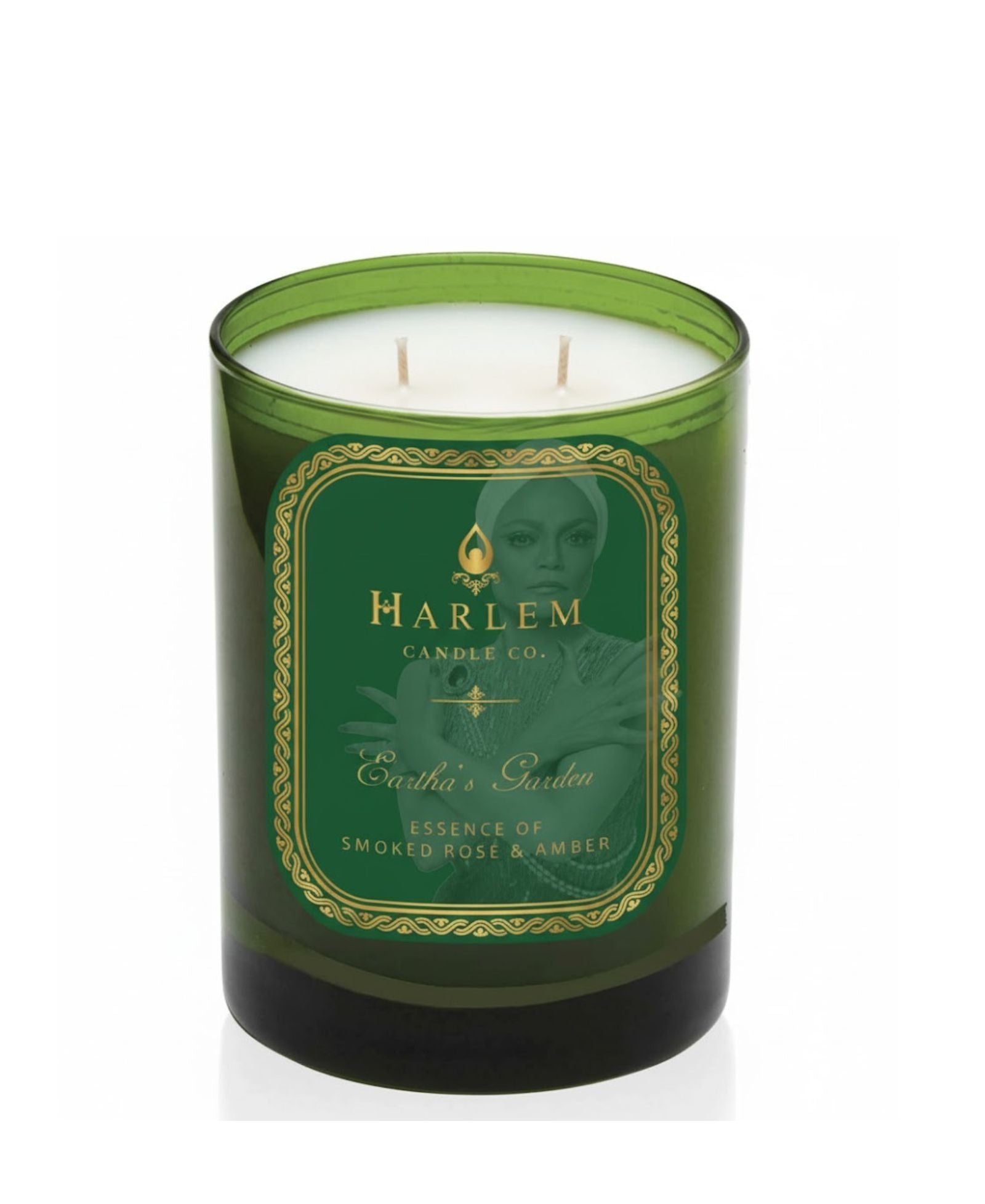
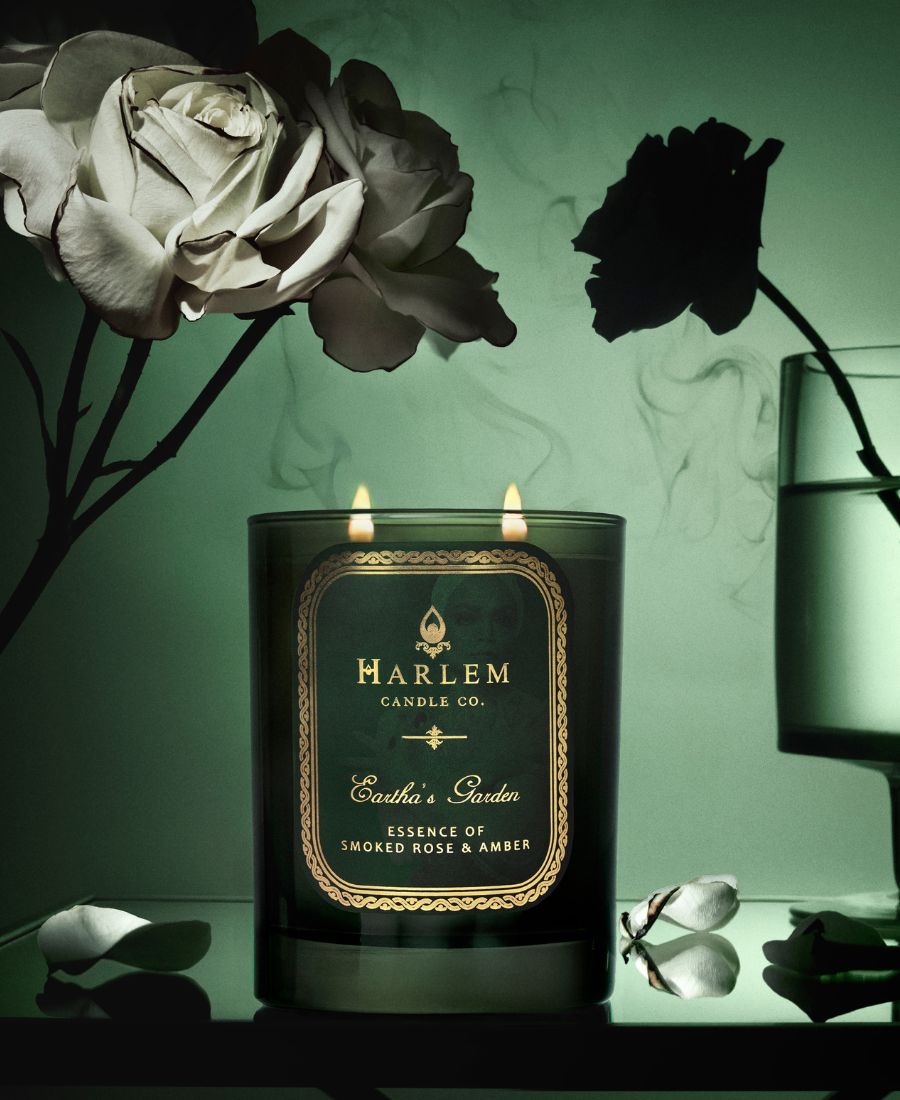
Our "Eartha’s Garden" Luxury Candle was created as a tribute to the fearless spirit of Eartha Kitt. The fragrance opens with a sharp, defiant snap: smoked rose and fiery Sichuan pepper. It is Eartha in her element—direct, unvarnished, impossible to ignore.
But then the scent shifts. Cali lemon and liquid amber emerge, evoking the rare quiet she found while working the soil of her Beverly Hills garden. The heart of labdanum and French jasmine is a nod to those early Parisian nights, while the base—oud and earthy moss—brings the narrative back to the land.
It is a sensory journey from the Southern clay of her youth to the sophisticated sanctuary of the woman she became. We light it to remember that being yourself is a price always worth paying.