

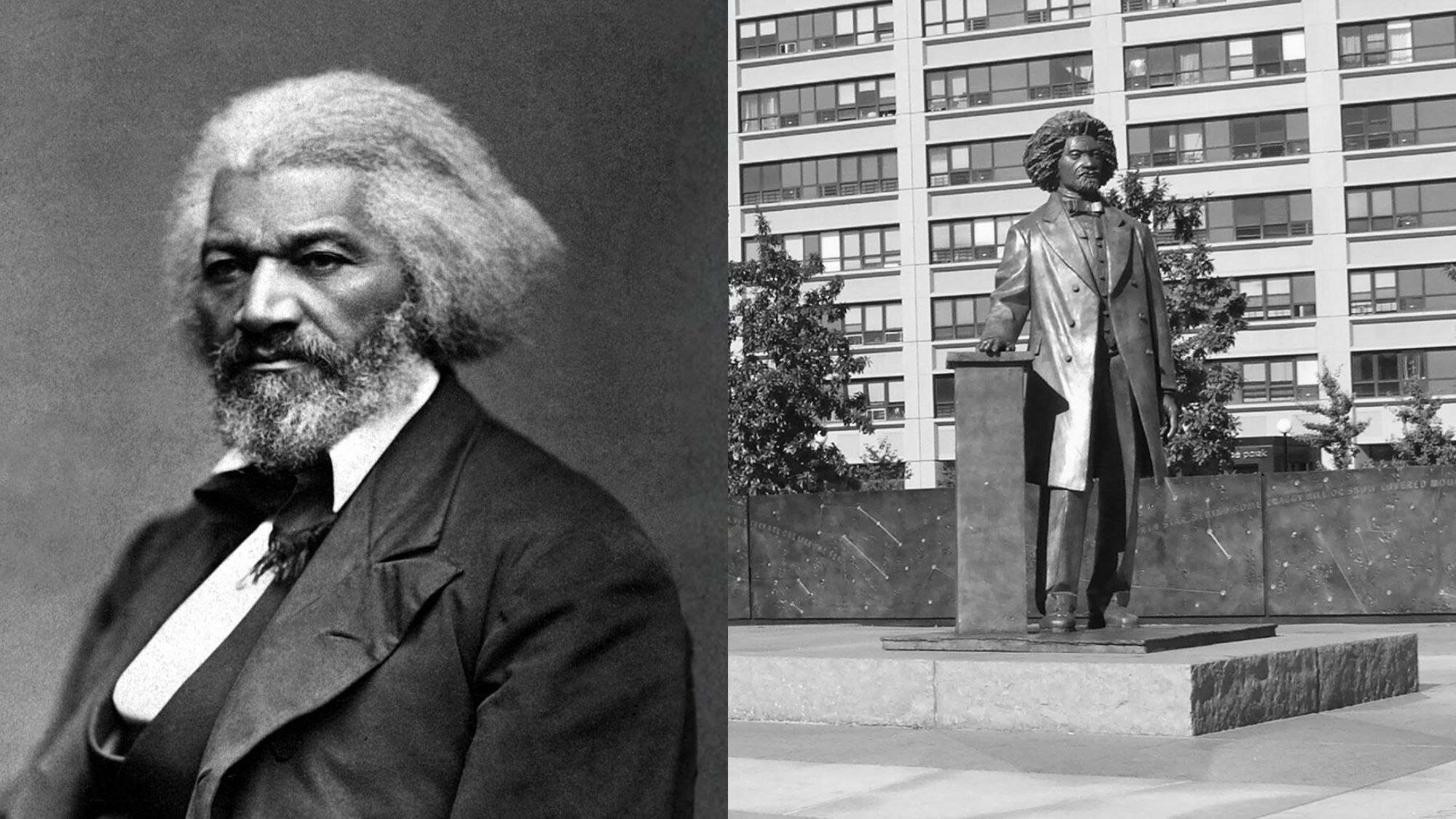
Icon Series: Frederick Douglass
"If there is no struggle, there is no progress." — Frederick Douglass
While he lived decades before the Harlem Renaissance, Frederick Douglass was undoubtedly one of the pioneers who paved the way for the movement. His journey—from the Maryland Tidewater to the heights of global statecraft—is the ultimate narrative of self-transformation. It is a story we can all carry with us and celebrate.
Born into slavery as Frederick Augustus Washington Bailey around 1818, his childhood was spent in the long shadow of the Wye House in Maryland. It was there, amidst the sprawling estate of Colonel Edward Lloyd, that he first witnessed the "Great House" contrasts: immense wealth built on systemic deprivation.

His life shifted fundamentally when he was sent to Baltimore. When his mistress, Sophia Auld, was forbidden by her husband from teaching the boy his alphabet, Douglass realized a fundamental truth: literacy was the only certain pathway to freedom.
He became a master of "street lessons," trading scraps of bread to poor white children in exchange for the "gold" of reading instructions. By age 12, he carried The Columbian Orator—a collection of speeches that gave him the rhetorical tools to demand his natural rights.

The logistics of his liberty required more than just a sharp mind; they required collaboration and a steady hand. Anna Murray, a free Black woman and the silent architect of his flight, provided the life savings and hand-sewed the sailor’s uniform that served as his disguise.
On September 3, 1838, carrying a borrowed "sailor’s protection" pass, Douglass traveled from Baltimore to New York City in less than 24 hours. He didn’t just find safety in the North; he found a platform. As a freeman, he dismantled pro-slavery myths by using his own mind as a "living counterexample." He authored three primary autobiographies, including the 1845 Narrative of the Life, which became an international bestseller and proved the power of the Black pen. Later, as an advisor to Abraham Lincoln and a global diplomat, he ensured that the Black intellectual tradition would remain a central pillar of the American struggle.
If you walk to the northwest corner of Central Park today, at 110th Street and Frederick Douglass Boulevard, you will find a memorial that serves as a symbolic bridge to this cultural identity. Designed by sculptor Gabriel Koren and Harlem artist Algernon Miller, the Frederick Douglass Circle is a place of profound "geometric language." Douglass stands there in 8-foot bronze, but he is placed at ground level. There are no cold, distant pedestals here; he remains an accessible "man of the people" grounded in the community.

The site breathes with history, from the Constellation Water Wall depicting the North Star to the granite paving inspired by traditional African American quilts, which historically served as coded maps for those seeking freedom. Even the perimeter fence, with its iron wagon wheels, pays tribute to the plantation blacksmiths who hammered out the tools of escape in the dark.
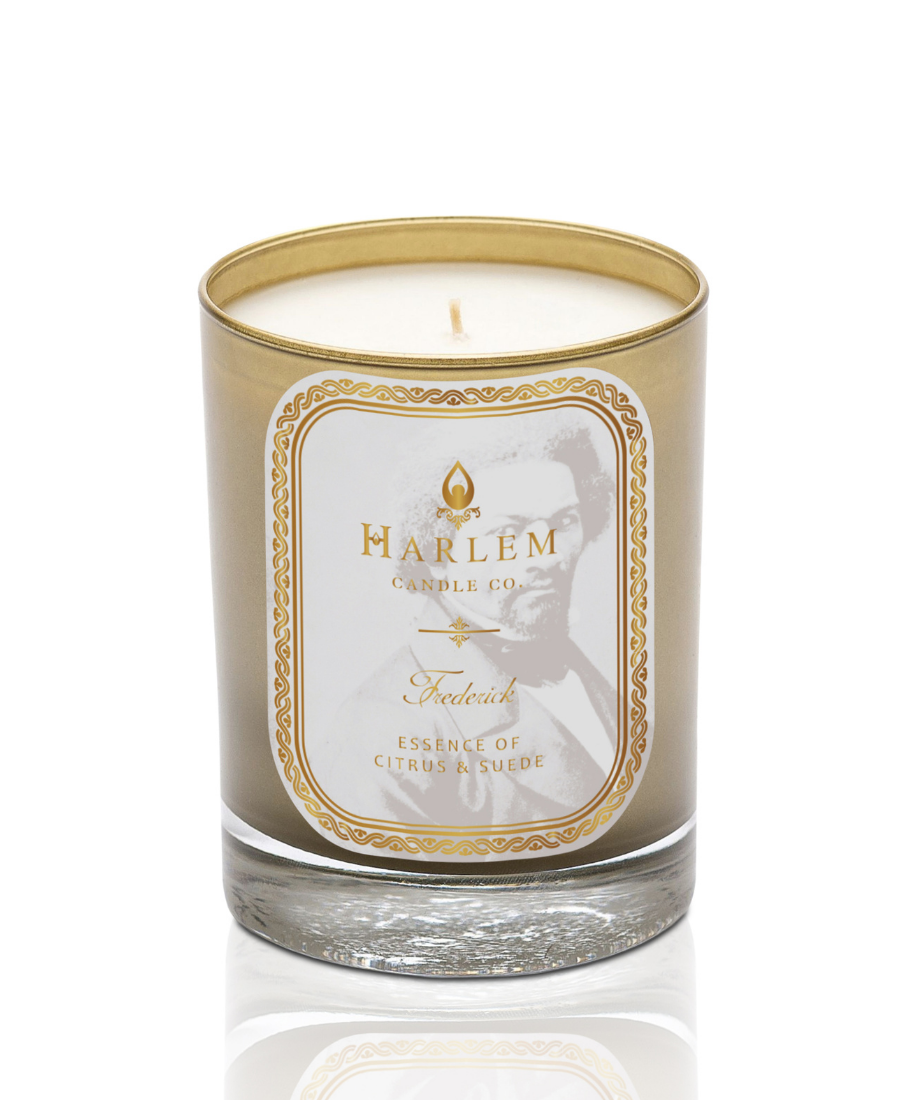
This rich, layered legacy is what we sought to capture in our "Frederick" Luxury Candle. We designed this fragrance to re-imagine the sensory contrasts of Douglass’s life, specifically the Wye House Orangerie. In his youth, this greenhouse was filled with exotic fruits that represented the "bitter fruit" of unrequited toil.
We have reclaimed those scents, transforming them into a celebratory olfactive narrative. The opening is a sharp, defiant burst of bergamot, smoked yuzu, and fresh green cardamom, followed by a blooming transformation of vanilla orchid, cypress, and ginger blossom. The base of suede, sandalwood, and tonka bean evokes the broadcloth suits and sophisticated dignity of a statesman who never stopped looking toward the North Star.


Read more
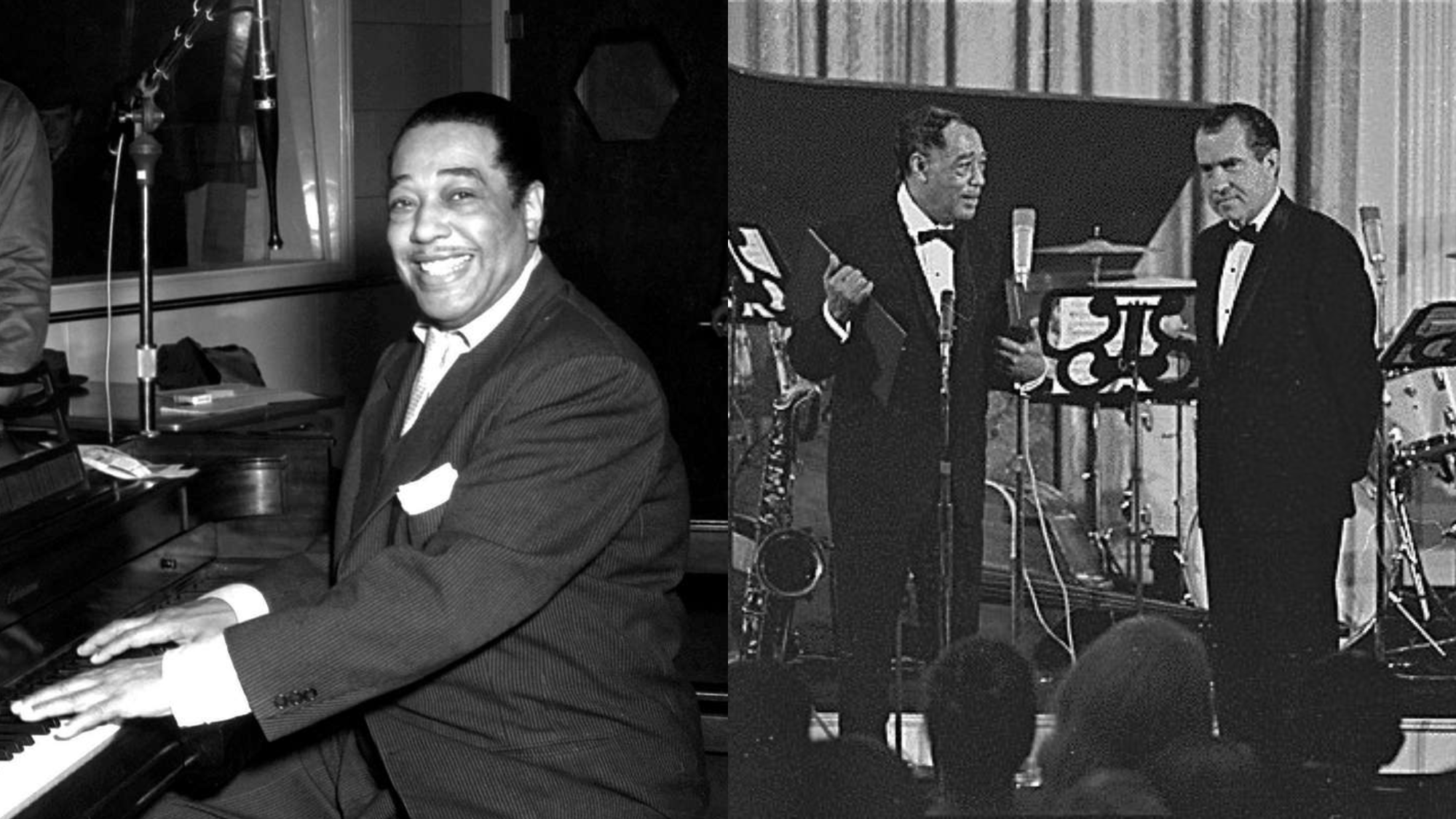
Harlem Brands honors jazz legend Duke Ellington—his groundbreaking compositions and timeless influence—with the Ellington Luxury Candle, capturing his spirit in fragrance.

"I do not have an act. I just do Eartha Kitt." — Eartha Kitt In her own words, Eartha Kitt famously declared that she did not have an act. She simply "did" herself. She didn't just follow a scrip...